
TRU Graphite-Graphene Consultants
High-tech Graphite - Graphene & Specialty Carbon Process Engineering
TRU Graphite-Graphene Consulting Team has a solid engineering, operations & business capability in graphite from ore resources, through to the manufacturing of 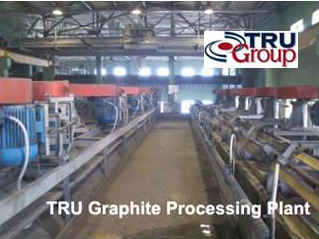 upmarket value-added leading-edge graphite-graphene products for end-use applications.
TRU Graphite-Graphene Team is a core of a dozen distinguished graphite-graphene experts including people who have each worked many years in executive management or as senior engineers / R&D scientists for existing high tech graphite companies such as Graphit Kropfmühl AG Germany, GrafTech USA, Nacional de Grafite Brazil, POCO USA, Superior Graphite USA, and from China (especially for R&D). Our team has hands-on experience in the design & engineering of graphite-graphene processes, plants and products - working extensively with many types of natural and synthetic graphite, natural flake graphite, vein, amorphous, ionic clays etc - with detailed knowledge of many different production methods. TRU approach is unique combining its high-tech north American-European graphite expertise with our graphite experts in Brazil and China to provide one of the strongest graphite teams available. We also have a access to a full capability (in the West and in China) for graphite-graphene laboratory testing and piloting operations - from the routine to the most specialized globally. The TRU Graphite-Graphene Team has world-class capability for Feasibility Studies, Investor Due Diligence, Engineering & Technical Analysis in all aspects of graphite-graphene.
This page re-directs but if not please click on -

Graphite containing carbon-carbon anode. TRU Group Inc was working in high-tech use of graphite in the early 2000's when it assisted a start-up to search for financing for a revolutionary lithium-ion battery with a graphite containing carbon-carbon anode. This carbon fiber anode material material consists of carbon reinforcement fibers and a carbon matrix. Generally, the carbon-composite fibres provide strength and electrical and thermal characteristics, and the matrix provides structural integrity and fills voids between fibres. The Li-Fiber cell cathode is Lithium Cobalt Oxide and electrolyte Lithium Hexafluorophosphate (LiPF6). Ninety per cent of the material cost for li-ion cells is associated with five cell components – overcharge / over-discharge protection circuit, cathode (LiCoO2 or LiNiCoO2) and anode (MCMB carbon) materials, electrolyte (LiPF6), and separator. The need for over-charge / over-discharge protection circuits or devices contributes significantly to the cost of lithium-ion batteries. The li-fiber battery would not overheat even in high energy capacity applications and requires no significant electronic protection circuit or heat management.
The main sponsor of that assignment are leading suppliers of aluminum graphite, nanotubes (allotropes of carbon with a cylindrical nanostructure), fullerenes (similar in structure to graphite) spinel and nanocarbons. In addition the firm is specialized in advanced graphite single or multilayer coatings. The carbon nonparasitic obtained from either arcing of graphite under water or thermal annealing of nanodiamonds are commonly called carbon nano onions (CNOs), or spherical graphite, as they are made of concentric fullerene cages. Carbon onion nanomaterials consist of spherical fullerene cores surrounded by onion-like nested spherical graphite layers.