
TRU Group Lithium & Brine Industries
All Lithium Technologies + Science + Design + Engineering + Multi-Product
Processing + Engineering + Multi-product Extraction + Simulations + Equipment + Application
TRU Group Diverse Brines: Assess + Extract + Process + Separate
Salt-flats/lakes + Geothermal + Oil & Gas Produced-water + Industrial Waste-waters + Desalination
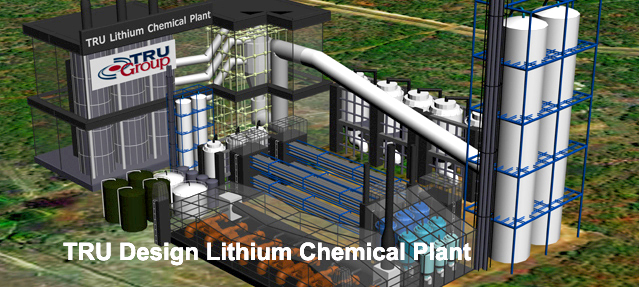
TRU Group Inc lithium & brine consultants has the most eminently qualified experienced-based lithium & brine team globally - active in lithium consulting since year 2000 with well over 150 person-years of lithium extraction, lithium chemistry, lithium materials & lithium products manufacturing experience - a strong lithium consulting capability in all aspects of lithium engineering, technology and industry - lithium brine, spodumene ore, clays, mining, geothermal, lithium extraction, lithium chemicals & Li metal manufacturing, engineering, refining and purification. We have worked extensively in lithium-ion batteries - like li-ion cells, lithium batteries, compounds, ceramics, metallic lithium / lithium alloys, and battery parts and all lithium ion battery materials, lithium battery, cell and parts assembly lines. We can manage all aspect of your lithium project from concept to production:
 TRU Group Inc Lithium Technology Supplier Scope
LITHIUM
Extraction • Processing • Chemicals • Lithium Metal & Alloys • Applications • Lithium Technology & Science • Equipment • Direct Lithium Extraction • Electro-chemical • Membranes
LITHIUM CHEMICALS
Li- Carbonate • Li-Hydroxide • Li Chloride • Organo-Lithium • Butyl-Lithium • Li-Cobaltate • Li-Floride • Li-hypochlorite • Li-Oxide (lithia)
LITHIUM METALS
Pure Li-Metal • Li-Alloys
BRINE INDUSTRIES
salars • salt-flats • salt-lakes • evaporated lakes • geothermal-brine • producer-brines • sea water • semi-processed waste brines • desalination plant waste brines • coal seam gas water • mining brines • wastewater • groundwater aquifer brines • evaporated salt
VALUE ADDED BRINE
Bromine • Iodine • Lithium • Potash • Magnesium • Strontium • Zinc LITHIUM-ION BATTERIES
Battery Design • Materials • Parts • Components • Plants • Equipment • Assemblies • Cell & Battery Manufacturing
CLEANTECH CRITICAL MATERIALS
Rare Earth Elements
Magnesium Metal & Alloy
Graphite-Graphene
Pure Lithium Metal
TRU Group clients in lithium and brine range from junior or high-tech, to multi-billion- dollar conglomerates, for example, ADNOC, Advanced Metallurgical Group LSM, Materials & Electrochemical Research Corp, EOG Resources, OM Group Inc, Mitsubishi Corporation, ExxonMobil, Resource Capital Funds USA, Sojitz Corp, Rio Tinto, POSCO, Lithium Americas, Rodinia Lithium, Chemtura-Lanxess, Petroleum Oman, Molymet, Ascensus Specialties and several other brine and mineral operating companies.
TRU Group Inc has a full comprehensive capability to engineer the production of battery grade lithium chemicals from brines or minerals! TRU Group is is a focused on the most advanced production technology in 2022 for for example engaged in multi-million dollar assignments in produced-water extraction, DLE direct lithium extraction, and state-of the art lithium metal / lithium alloy engineering. We are world leaders in salt lake salar exploitation, brine & mineral ore (spodumene, pegmatites etc) leading-edge lithium extraction, processing, purification refining and recycling technologies - those in use, prospective, and leading edge - solar evaporation, selective ion adsorption, solvent extraction, electrodialysis, DLE Direct Lithium Extraction, nanofiltration & advanced membrane, sileach /u-max, spodumene conversion, mica etc. Importantly our team includes strong potash, boron / borates, iodine, bromine, magnesium and fertilizer capability usually lithium production coproducts. In 2005/6 we built on our DLE expertise by assembling sub-teams TRU Group Membrane Team and the TRU Group Electro-chemical Team that have full expert capability in electrolysis, electrolysers, electrodialysis of brines and minerals (spodumene) as well as their attendant membranes: unmatched with hands-on experience
TRU Group Lithium & Brine Team is expert in all aspects and lithium technology: Indeed, in 2020 there has been increasing demands from our clients for due diligence evaluations of lithium technology supplies - 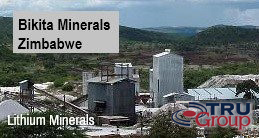 especially when claims of a breakthrough is made. Our lithium expertise covers production and refining of lithium brines, spodumene: lithium basic chemicals - lithium carbonate, lithium hydroxide, lithium chloride: lithium intermediates - organo-lithium, butyl-lithium, lithium metal, lithium alloys and compounds - lithium cobaltate (LiCoO2 - positive electrode-active material for a lithium secondary cell). We have simulated, mapped, described and analyzed process details of many producer facilities. TRU Group has conducted numerous lithium Lithium Feasibility Studies and Lithium Investor Due Diligence assignments. Importantly in the lithium and battery materials space - where there have been few successes of over 100 new project attempts since 2009 when TRU Group made groundbreaking presentations at the first global lithium conference in San Diego Argentina- Now, in 2022, TRU Group is following more than 150 lithium brine projects in the "Lithium Triangle" alone. TRU Group standards are high and we are the most high-profile globally in warning of the now proven dramatic consequences of the lack of technical competence in the comparatively novel highly-specialized lithium space (like DLE direct lithium extraction). TRU Group has all the cross-functional expertise required. This being so TRU Group participates in lithium projects TRU Group assesses as totally legitimate and that have reasonable prospects.
TRU Group Lithium & Brine Team members 2022, with over 150 person-years of experience at all the lithium Big-3 brine majors - SQM, FMC, Chemetall and China facilities - have managed, evaluated, designed, engineered, pilot-tested, specified equipment, developed and built these existing lithium plant facilities. Indeed the Team includes individuals who worked on the first geological & chemical lithium investigations in the 1970's for Salar de Atacama, Chile and Silver Peak, USA! By 2026 the TRU Group Brine Team has completed more than 100 assignments!! Our team members know, have visited and have assessed most of the lithium facilities or salars in the lithium triangle Chile, Argentina & Bolivia, plus China Nevada USA, Australia, Canada, Russia and Zimbabwe etc. 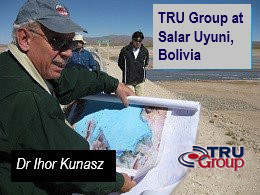 Indeed, Ihor Kunasz (pictured left at Salar Uyuni) conducted the original exploration and brine resource determination of the Salar de Atacama. TRU Group undertook the most comprehensive, salt-flat through all downstream facilities, operational and financial global analysis of the lithium Big-3: SQM, FMC and Rockwood-Chemetall (acquired 2014 by Albemarle Corporation). TRU Group has been engaged concurrently in several salar brine, mineral based spodumene and Sulfate of potash (SOP) / oilfield produced water / geothermal / bromine brine feasibility / amenability lithium chemicals conversion studies.
TRU Group Inc uses the most advanced chemistry simulation modeling to evaluate Lithium Brine Process Engineering. For example, TRU Group 2022 in a current assignment is using simulations to evaluate DLE direct lithium extraction process claims (DLE selective adsorption, DLE 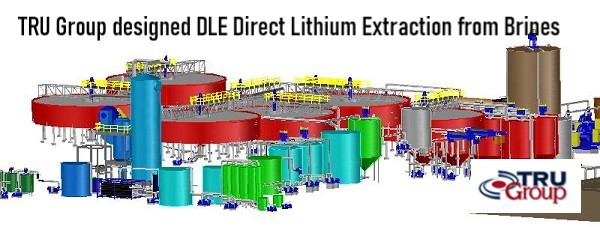 ion exchange, DLE solvent extraction, DLE electrolytic and DLE electro-dialysis ED). This work is part of a deep dive investigation of more than twenty enterprises globally claiming to possess or are currently developing Direct Lithium Extraction technology (especially for low lithium concentration brines). TRU Group has modeled brine-bittern-carbonate-process options to rank over 170 global lithium brine salt lakes / flats / salars (plus geothermal, oilfield brine sources) for their amenability to the use of emerging lithium extraction technology (electrodialysis • selective absorption • ion exchange • POSCO • Eramet • Tenova-Bateman • Simbol Materials-Alger - Tesla Battery driven etc). We have also evaluated and ranked major global lithium mineral ore sources comparing mineral-based to brine-based resources.
  TRU Group have undertaken many technical, engineering, modeling, industry, economic, financial, cost, marketing, supply-demand, feasibility and due diligence assignments in lithium. TRU Group Lithium & Brine Team includes lithium application specialists for example in batteries [plus battery design], fuel cells, electric vehicles, glass, lithium chemicals [such as lithium lubricants / greases and pharmaceuticals] lithium alloys and other battery material.
TRU Group Lithium & Brine Team member visits included the salt lake facilities and other key lithium brine properties, for example the following -
- Albemarle Corporation: Rockwood (formerly Chemetall Foote), USA - Silver Peak, NV, USA*
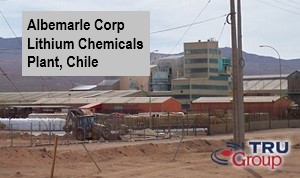
- Albemarle: Chemetall-SCL: Sociedad Chilena del Litio La Negra, Chile - Salar de Atacama, Chile*
- Livent: FMC Corporation, USA – Minera del Altiplano, Argentina - Salar del Hombre Muerto, Argentina**
- Qinghai CITIC Guoan and Qinghai Lithium, Taijinare China Qaidam Basin, China
- SQM - Soquimich - Sociedad Química y Minera de Chile S.A., Chile - Salar de Atacama, Chile
- Lithium Americas (Minera Exar) / Orocobre - Salars Cauchari-Olaroz, Argentina
- Bolivian Government, Bolivia - Salar de Uyuni, Bolivia
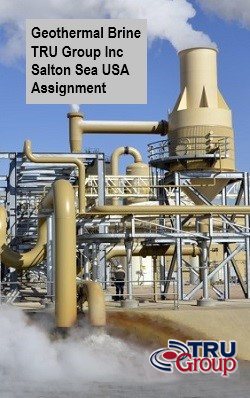
TRU Group has diverse BRINE TECHNOLOGY capability. Our brine projects and expertise encompass salars, salt-flats, salt-lakes, evaporated lakes, geothermal-brine, produced-water brines (from oil & gas drilling / fracking), sea water, semi-processed waste brines, desalination plant waste brines, coal seam gas water, mining brines, any wastewater and groundwater aquifer brines or evaporated salt in various forms. 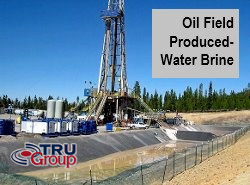 TRU Group in 2018 was continuing its assessment of the amenability of various processes for lithium & zinc extraction from Salton Sea geothermal operations, USA. We are also still working 2022 on a number of similar assignments (including a detailed feasibility study in the US oil patch) for the largest American and Global Oil & Gas companies with respect to oilfield produced-water brine for the extraction of Bromine • Iodine • Lithium • Potash • Magnesium • Strontium • Zinc as well as chlor alkali products. Earlier, TRU Group examined the Smackover brinies in in the USA for Chemtura-Lanxess bromine / bromide, lithium and other chemicals, and in 2022 again for a major oil company using DLE direct lithium extraction.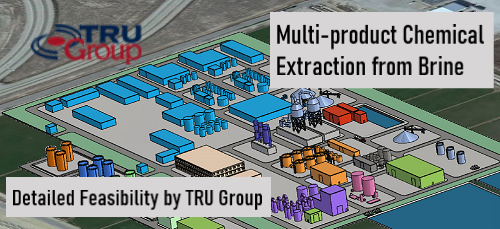
TRU Group has in depth state-of-the art engineering capability in extracting valuable brine-based chemicals such as lithium, magnesium, potassium, bromine, iodine, boron, strontium and others. Indeed, our continuing 2021-2023 assignments include cleaning the final water discharge for portable, agricultural or demineralized-water use!. . Our TRU Group Lithium & Brine Team members have visited and have studied all of the major and most of the undeveloped brine resources - South America, China, Tibet, and USA (Smackover AR & Salton Sea CA). Examples,Salar de Atacama, Maricunga, Cauchari, Incahuasi, Olaroz, Puna Region, Clayton Valley NV, Smackover Arkansas bromide brines, Sabkha Matti / Dead Sea Middle East and many others around the world.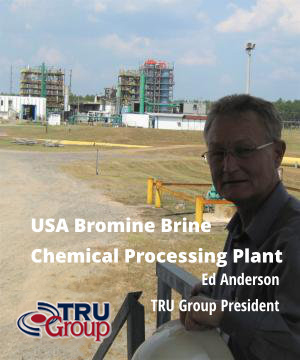
TRU Group Inc has the strongest capability to evaluate brine asset investments and undertake due diligence at all levels of brine processing. Many brine-based facilities are only economic as multi-commodity operations and include lithium, potash, bromine, iodine, fertilizers, boron, boric acid, chlor alkalies, strontium carbonate, magnesium, salt and other salt products - for which TRU Group have a solid capability. Also see -
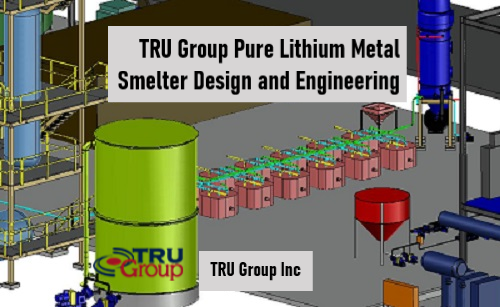
TRU Group has engineered an integrated elemental metallic lithium facility that is proceding to piloting. Then TRU Group late 2023 has begun another challenging prefeasibility study of a large metallic lithium plant. (The facility will be integrated with metallic sodium using electrolytic Downs Cells and take advantage of the attendant byproduct chlorine installation).
TRU Group in 2023 is following over 150 brine projects in the "Lithium Triangle" and has used a unique evaluation criteria to evaluate and rank them. TRU Group can provide the updated ranking for any lithium project based on the very latest developments. See: TRU Group Investing in Lithium Companies. Virtually all Chinese brine-based lithium operations grossly underperformed. Even the most modern ore-based Chinese Jiangsu plant built by western engineers seriously underperformed (explosion and sold at a loss). Production of lithium chemicals to the crucial strict specifications is very challenging! Lithium technology is tricky, high tech and highly specialized. See +
+  +
+ 
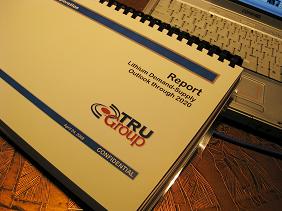
TRU Group Lithium Supply-Demand 2020 forecast was a major detailed assessment for Mitsubishi Corporation employing our team of lithium supply side and demand side experts. The supply analysis was in detail, by producer & resource, for both brine and minerals [mainly spodumene]. The demand side analysis included TRU Group proprietary lithium consumption projections in batteries, lubricants, glass / glazing / ceramics, air conditioning, pharmaceuticals, polymers, metal alloy, and other applications based on our own in-depth assessments of these markets. The work included a forecast of the main basic lithium chemicals - lithium carbonate, lithium chloride and lithium hydroxide. Competitive process and individual producer (existing and aspiring) costs were modeled calculated and compared. The detailed application outlook included demand in electric vehicles [including a comprehensive examination of electric vehicle EV and HEV, PHEV, PEV battery technology innovation and the readiness of lithium cell technology for this application. Lithium batteries - which use cobalt, graphite and lithium updated: 
TRU Group Lithium & Brine Team  Engineering and Design is by American, Canadian or European certified licensed Professional Engineers. TRU Group Inc is a registered member of Professional Engineering Ontario Canada. and "Qualified Persons" Stock Market securities regulations (CRIRSCO, SEC USA NI 43-101 JORC) and PEO Canada. Join the TRU Group Lithium and Brine Team
Concepts for TRU Group Inc lithium consultants: lithium, consultant, lithium consultant, lithium consultants, lithium consulting, lithium battery consulting, lithium battery materials consultants, lithium experts, lithium engineers, salt, brine, lithium geologist, lithium resource, lithium plant design engineering , lithium carbonate plant engineering & design. Li, Lithium oxide (lithia) Li2O, Lithium bromide LiBr, Lithium carbonate Li2CO3, Lithium hydroxide monohydrate LiOH.H2O, Lithium chloride LiCl, Lithium fluoride LiF, Lithium hypochlorite LiOCl, Butyllithium: C4H9Li.Paradox Basin "White Cloud" simbolmining.com americanlithium.com "american lithium" Minerals AMLM Li3Energy.com Lithium 3 Taijinair simbolmaterials.com Controlled Thermal Resources Berkshire Hathaway Burba Symbol Materials